Robert L. Amico | Imdat As | Steve Bass | Philip Bess
Robert Brandt | Richard S.
Bullene, C.S.C. | Norman Crowe | Diana Creech
Alan DeFrees | Dennis Doordan | Richard
Economakis | Sallie Hood
Frank Huderwitz | Léon Krier | Tom
Lowing
Michael Lykoudis | David
Mayernik | Ettore Maria Mazzola
Richard Piccolo | Demetri Porphyrios | Ingrid
Rowland | Ron Sakal
Giovanna Sandusky | Steven Semes
| Thomas Gordon Smith
John Stamper | Duncan Stroik | Krupali
Uplekar
Carroll William Westfall | Samir Younés
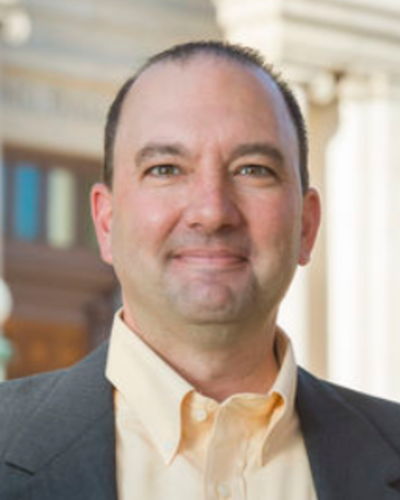
Robert L. Amico. Professor. Phone: 574-631-5862.
Commitment to freedom of expression, from traditional to avant-garde,
Prof. Amico’s design studios emphasize diversity, variety, creativity,
quality, high achievement and more than one approach in academia and
practice. Refer to his stance in higher education, “A peaceable
kingdom of architects,” Architectural Record (August
1999), and projects in the School’s Acroterion 2003-2004
(pgs. 48-49, 54-55), Acroterion 2002-2003 (pgs. 26-27, 35,
42-43), 100 Years of Architecture at Notre Dame (pgs. 51-59),
and the School’s online
gallery. In 1978-79, President Theodore M. Hesburgh, C.S.C., appointed
Prof. Amico chairman and professor of the University of Notre Dame School
of Architecture. He was chosen to serve four, three-year terms during
which he initiated the endowed graduate degree program in architecture,
permanent facility establishment of the Rome Architecture Center, proposal
for the Chicago Architecture Center, and School status for Architecture.
Prof. Amico arrived at Notre Dame from the University of Illinois at
Urbana-Champaign, one of the earliest, largest, and most comprehensive
programs in the U.S. At Illinois, he was selected Faculty Fellow, tenured
at age 32, appointed to The Graduate College, elected chairman of Architecture
Design, and earned full professor at age 38. >
More
Imdat As. Assistant Professor. Phone:
574-631-3767. Email: ias@nd.edu.
Web: http://www.nd.edu/~ias.
Prof. As holds a Ph.D. in Design from Harvard and a Master’s of Science from MIT. He instructs students in three-dimensional modeling, computer-aided design and other visualization computer applications.
Steve Bass. Visiting Assistant Professor of Architecture. Phone: 574-631-3770. Email: bass.11@nd.edu.
Prof. Bass is an architect in practice in New York City since 1974. He holds a Bachelor of Architecture degree from Pratt Institute; a Master of Arts from the Royal College of Art, London, where he studied under the direction of Dr. Keith Critchlow; and was a participant in the initial Prince of Wales' Summer Course in Architecture. He is a Fellow of the Institute of Classical Architecture & Classical America where, since 1991, he has taught on the theoretical and applied aspects of proportion and geometry in design. He has written articles for the ICA&CA's journal The Classicist, for Traditional Building magazine, and for American Arts Quarterly. His book, Proportion in Architecture, is forthcoming from W.W. Norton.
Philip Bess. Graduate Director
and Professor. Phone: 574-631-7739. Email: pbess@nd.edu.
Prof. Bess began overseeing the Graduate Program in August 2004. He teaches graduate urban design and theory, and continues his professional work as a design consultant for municipalities, architects and community development corporations working through the office of Thursday Associates. From 1987-88 he was the director and principal designer of the Urban Baseball Park Design Project of the Society for American Baseball Research; and in Boston in August 2000 he directed and coordinated the ultimately successful "Save Fenway Park!" design charrette. Prof. Bess is the author of City Baseball Magic: Plain Talk and Uncommon Sense About Cities and Baseball Parks (1989), Inland Architecture: Subterranean Essays on Moral Order and Formal Order in Chicago (2000), and most recently Till We Have Built Jerusalem: Architecture, Urbanism, and the Sacred (2007). Prof. Bess holds an M.Arch from the University of Virginia (1981), a Master of Theological Studies (M.T.S.) from the Harvard Divinity School (1976), and a B.A. from Whittier College (1973).
Robert Brandt. Professional Specialist. Phone:
574-631-8705. Email: Brandt.5@nd.edu.
A native Hoosier born and raised in Evansville, Prof. Brandt has been
on the faculty since 1992. Trained as a sculptor, he earned his B.A.
at the University of Southern Indiana in 1986 and his M.F.A. from Indiana
State in 1989. He leads the Furniture Design concentration, teaching
students an ethic in craft. Prof. Brandt believes that to express an
idea clearly, craftsmanship must of the highest quality. The courses
Prof. Brandt offers allows students to explore the interiors of their
designs while analyzing furnishings in an architectural context. Students
are exposed to and execute the processes of tectonics while learning
about the structural and aesthetic properties of wood. Students also
cope with the high ground and pitfalls of the construction process while
gaining an understanding of design, 3-D objects and craft. >
Sampling of Professional Design Work
Richard Bullene, C.S.C.. Assistant Dean and
Assistant Professor. Phone: 574-631-7723. Email: Bullene.3@nd.edu.
Fr. Bullene is a “Double Domer” having earned his B.Arch.
in 1976 and his M.Div. in 1981. Fr. Bullene earned a Ph.D in architectural
theory at the University of Pennsylvania in 1994 writing on Ernesto
Rogers. He has served on the South Bend Historic Preservation Commission
and the diocesan Committee on Art and Environment. Fr. Bullene teaches
first-year courses in drawing and theory, and fifth-year design courses.
Diana Lefever Creech. Adjunct Assistant Professor. Phone: 574-453-3613. Email: dcreech1@nd.edu.
Norman Crowe. Professor. Phone: 574-631-6194.
Email: Crowe.2@nd.edu.
Prof. Crowe’s most recent teaching assignments include fourth year design studios, graduate level building technology, and seminars in sustainability and broader environmental concerns as they relate to the practice of architecture. His principal areas of research are architectural and urban design in relation to sustainability and passive energy design. He is the author of numerous articles and papers, mostly on environmental issues. He is the co-author of the book Visual Notes: For Architects and Designers (Wiley and Sons, 1984), co-editor of Building Cities: Towards a Civil Society and a Sustainable Environment (Artmedia Press, 2000) and he is the author of Nature and the Idea of a Man-made World: An Investigation into the Evolutionary Roots of Form and Order in the Built Environment (MIT Press, 1995). Prof. Crowe holds degrees in architecture from Cornell University and the University of Oregon and is registered as an architect by NCARB and the State of New York. Currently he is working on research that concerns the psychological and environmental roles of permanence in architecture and urbanism.
Alan DeFrees. Professional Specialist. Phone:
574-631-8084. Email: DeFrees.3@nd.edu.
Web Page: http://www.nd.edu/~adefrees/.
Prof. DeFrees has taught at the University of Notre Dame School of Architecture
since 1994. His professional practice spans nearly 30 years and includes
office and retail buildings, sports facilities, restaurants, and school,
church and hospital additions. Since 1990 he has focused on a range
of residential work from low-cost urban in-fill projects to high-end
residences and condominiums, including many homes along Lake Michigan.
Prof. DeFrees has used computers in architectural applications since
1979 including computer programming for structural engineering, energy
design and perspective drawing. His computer-aided drawing and graphic-design
experience date back to 1988. Prof. DeFrees is an accomplished woodworker
whose work in sculpture and furniture has appeared in many exhibitions
and publications. In 2001 he was nominated for the American Institute
of Architecture Students National Educator Honor Award and the same
year he was voted “Educator of the Year” by AIAS-ND. He
is a 1974 graduate of Notre Dame's architecture program and has done
graduate work in Fine Arts at Indiana University.
Dennis Doordan. Professor. Phone: 574-631-6771.
Email: Doordan.1@nd.edu. Web Page:
http://www.nd.edu/~ddoordan/.
Prof. Doordan, an architectural historian, also serves as Chair of the
University of Notre Dame's Department of Art, Art History, and Design.
Since joining the faculty in 1990, he has taught the required two-semester
survey of the History of Architecture and a variety of elective courses
including the History of Twentieth Century Architecture and a seminar
on Frank Lloyd Wright. Doordan has received the Kaneb Award given to
Notre Dame professors for outstanding teaching at the undergraduate
level. Prior to coming to Notre Dame, Prof. Doordan taught at the University
of Illinois at Chicago and Tulane University. His academic credentials
include MA, M.Phil.and Ph.D. degrees from Columbia University and a
BA from Stanford University. He has published extensively on various
aspects of 20-century architecture, including his most recent book,
Twentieth-Century Architecture (Prentice Hall) which presents
a detailed account of the many architectural orientations of the last
100 years. He is co-editor of Design Issues, a journal devoted
to the history, theory and criticism of design.
Richard Economakis. Associate Professor.
Phone: 574-631-7887. Email: Economakis.1@nd.edu.
Prof. Economakis joined the faculty in 1996 by way of London where since 1990 he was Design Associate with Porphyrios Associates and Senior Editor of traditional titles at Academy Editions. He has also worked in the offices of John Simpson and Partners in London, Allan Greenberg in New Haven, and Robert A.M. Stern in New York. Prof. Economakis has edited numerous books including monographs on the work of architects Léon Krier and Quinlan Terry and the books Building Classical and Acropolis Restoration. He holds a B. Arch and an M.A. from Cornell University. He has also served as Assistant Design Tutor at the Prince of Wales’s Institute, London. Prof. Economakis served as Interim Director of Graduate Studies at the School of Architecture for the academic year of 1999-2000. As part of his teaching methodology he stresses the interrelationship of architectural and urban typologies, exploring them in a carefully considered sequence of foundational design projects adapted for both undergraduate and graduate studios. Prof. Economakis has also co-organized two summer design programs in Greece based in the city of Nauplion. He co-edited the School’s publication, Building Cities (Artmedia), and is the author of the books Nisyros: History and Architecture of an Aegean Island (Melissa), and Acropolis: Ancient Cities (Artmedia). In 2003 he received the University of Notre Dame’s Kaneb Teaching Award; he was named Educator of the Year in 2002 by the School of Architecture’s Student Chapter of the AIA. Prof. Economakis is principal of Masten Economakis Architectural Design Consultants, currently involved in the design of a 30-acre commercial development and houses in the U.S. and Europe. He was co-founder (1997) of the Deupi Economakis Design Partnership, which has produced new urban schemes for towns in Britain, the U.S., Turkey and Greece. Prof. Economakis’ design for a new gateway to the town of Seaside, Florida, was a runner-up winner in the Seaside Ceremonial Landmark Competition. In 2002-3 Prof. Economakis served as Design Associate for the new Whitman College in Princeton University by Porphyrios Associates, supervising schematic and design development phases of the project. In June 2007 he was invited to design a public building and residential units in the new town of Cayalà in Guatemala, which has been master-planned by Léon Krier.
Sallie Hood. Associate Professor. Email:
hood.11@nd.edu.
In her professional practice of architecture and urban design, Center for Building Communities' Director of Design, Sallie Hood, has developed ideas about sustainable design since the early 1980s by working in metropolitan Chicago, Michigan, Indiana, Virginia, Arkansas, New Mexico, and California. Along with partner, Prof. Ron Sakal, she has dealt with situations as simple as a street too wide to cross safely — and as tricky as finding a way to cluster pedestrian-friendly car dealerships on a California property constrained by a 10-lane freeway, a drainage channel, and a huge refinery. Their Santa Fe project "Solana Neighborhood Center 2038: A Model for Growth Without Sprawl" won the 1999 Ahwahnee Award of Honor for Regional Planning in the 14 western states, and professional awards from New Mexico Chapters of the American Planning Association and the American Institute of Architects. The Chicago Historical Society in 1988 commissioned Prof. Hood and Prof. Sakal to create three murals depicting a promising urban design future for downtown Chicago; these award-winning visions have been exhibited throughout the United States, Europe, and Asia. They have been regular invited presenters at the International Making Cities Livable Conferences and the Traditional Building Exhibition and Conferences. Prof. Hood and Prof. Sakal have also made invited presentations at the Chicago Architecture Foundation, the Sierra Business Council´s third Planning for Prosperity advanced seminar for local decision-makers, Chicago´s Business and Professional People for the Public Interest´s Roundtable Discussion Series, 1000 Friends of New Mexico´s Lecture Series, and the biannual conference of the New Mexico Chapter of the American Planning Association.
Frank Huderwitz. Adjunct
Assistant Professor. Phone: 574-246-1580. Email: fh@p2arch.com.
Prof. Huderwitz is a licensed architect who earned his B.Arch. in 1980 and M Arch. in 1992 from the University of Notre Dame. His graduate thesis Psychology and Architecture, explores perception and human interaction in the built environment. Prof. Huderwitz also earned an M.B.A. in 1985 from Monmouth University. He brings over 25 years of professional practice experience to the School and is a co-founding principal of PHASE TWO Architects. Prof. Huderwitz has been teaching in the School of Architecture since 1989, and has taught courses in all levels from first-year through fifth-year, as well as in the graduate program. Currently Prof. Huderwitz teaches computer-aided design theory and techniques in the graduate program.
Léon Krier. Visiting Professor,
Rome.
Best known as the architect of the Prince of Wales’s model
town of Poundbury in Dorset, England and as the intellectual godfather
of the New Urbanism movement in the U.S., Krier believes architecture
should not be left to architects alone. He says the world is paying
a high price for abandoning architecture to the whims of experts, forsaking
a healthy urban effect through the creation of viable communities in
favor of fleeting fashion. His views have inspired many notable people
— architecture professionals and amateurs alike — to pursue
a better built environment. Noted architect and town planner Andrés
Duany experienced the transforming power of Mr. Krier’s ideas
at a lecture that changed the course of his career. “Krier gave
a powerful talk about traditional urbanism, and after a couple of weeks
of real agony and crisis I realized I couldn’t go on designing
these fashionable tall buildings, which were fascinating visually, but
didn’t produce any healthy urban effect. They wouldn’t affect
society in a positive way,” Mr. Duany says. “The prospect
of instead creating traditional communities where our plans could actually
make someone’s daily life better really excited me. Krier introduced
me to the idea of looking at people first, and to the power of physical
design to change the social life of a community.” Krier has also
taught architecture and town planning at the Royal College of Arts,
London; Princeton University; the University of Virginia and Yale University.
He is a founding trustee of the New School for Traditional Architecture
& Urbanism in Charleston, South Carolina. Krier’s honors include
the Jefferson Memorial Gold Medal; the Berlin Prize for Architecture;
the Chicago American Institute of Architects Award; the European Culture
Prize and the inaugural Richard H. Driehaus Prize for Classical Architecture.
Tom Lowing. Visiting Assistant Professor. Phone: 616-471-6003. Email: Lowing.1@nd.edu.
Michael Lykoudis. Dean and Professor. Phone:
574-631-4699. Email: Lykoudis.1@nd.edu.
Appointed Dean in July 2002, Michael Lykoudis has served as professor of architecture at Notre Dame since 1991. A national and international leader in linking architectural tradition and classicism to urbanism and environmental issues, he has devoted his career to the building, study and promotion of traditional architecture and urbanism. His activities feature the organization of several major conferences that have been collaborations between Notre Dame and other organizations including the Classical Architecture League and the Institute of Classical Architecture & Classical America, A Vision of Europe and the Congress for New Urbanism. The conference and exhibition entitled “The Art of Building Cities,” took place in 1995 at the Art Institute of Chicago and was the first event in this country to specifically link the practice of contemporary classicism with the new traditional urbanism. An exhibition and conference titled “The Other Modern,” took place in Bologna, Italy in 2000, and a conference titled "Three Generations of Classical Architects: The Renewal of Modern Architecture" was held in October 2005 at Notre Dame. Dean Lykoudis is the co-editor of two publications, "Building Cities," published in 1999 by Artmedia Press, and "The Other Modern" exhibition catalogue published in 2000 by Dogma Press. A third book, "Modernity, Modernism and the Other Modern," is forthcoming from W.W. Norton & Co. At Notre Dame, Dean Lykoudis has served the School in a number of capacities first as the Director of Undergraduate Studies then as Associate Chair and Chair prior to becoming Dean. As Director of Undergraduate studies for over 10 years he was the principal organizer of the new classical and urban curriculum, and Dean Lykoudis established several new initiatives within the School of Architecture. In association with the South Bend Downtown Partnership, he contributed to the formation of the South Bend Downtown Design Center, a program that gives Notre Dame students hands-on experience with urban and architectural design projects in realistic settings while also contributing to the community. This Center has been renamed the Center for Building Communities and will coordinate the regional, urban and architectural design studios of the School. Its programs will include the exploration of regionally adapted classical and vernacular students’ designs for modular buildings to be built in host cities. Most recently he initiated the renewal of the School’s graduate program with the objective of doubling its enrollment, increasing its offerings and developing its focus on classical architecture and urbanism. For the 2000-2001 academic year Dean Lykoudis received Notre Dame's Kaneb Award for outstanding undergraduate teaching. He has lectured at universities around the country and abroad as well as to professional and civic organizations. A graduate of Cornell University, Dean Lykoudis earned his Master's degree from the University of Illinois' joint business administration and architecture program. Prior to joining the Notre Dame faculty, he worked as a project designer and architect for firms in Florida, Greece, Connecticut and New York. He has directed his own practice since 1983 in Athens, and Stamford, Conn. and now in South Bend, Ind.
David Mayernik. Associate
Professor. Email: dmayerni@nd.edu.
Prof. Mayernik is a practicing urban designer, architect, painter
and writer. A graduate of Notre Dame (B.Arch ’83), in 1995 Prof.
Mayernik was named one of the top 40 architects under 40 in the U.S.
by a jury of notable architects headed by New York architect Robert
A.M. Stern. He has won numerous awards and competitions, including the
Gabriel Prize for research in France, the Steedman Competition Fellowship
to the American Academy in Rome, and the International Competition for
the Minnesota State Capitol Grounds (with partner Thomas Norman Rajkovich
'83); that project won an Arthur Ross Award from Classical America.
His project for the M. Crist Fleming Library at TASIS (The American
School in Switzerland) won a 2005 Palladio Award from Traditional
Building magazine. Prof. Mayernik has been the master planner and
design architect since 1996 for the TASIS campuses in Lugano, Switzerland
and Surrey, England; the Lugano project was featured in the Institute
for Classical Architecture’s A Decade of Art & Architecture,
and Architetture nel Territorio, Canton Ticino 1970-2000. He
has participated on several town-planning charrettes in the U.S. Prof.
Mayernik is also a painter in oil, buon fresco and watercolor. He studied
fresco with renowned restorer Leonetto Tintori in Tuscany, and has painted
frescoes for his own buildings in Switzerland and for churches there
and in Italy. In addition to teaching with the University of Notre Dame
in South Bend and Rome, he has taught in the Graduate Fine Art program
of the New York Academy of Art, with the Institute for the Study of
Classical Architecture, and with the University of Virginia’s
Erasmus-Jefferson Scholars Summer in Tuscany program. David Mayernik’s
book, Timeless Cities: An Architect’s Reflections on Renaissance
Italy, was published by Westview Press, September 2003 (the paperback
edition in 2005). He is the co-editor of the online Humanist Art
Review (www.humanistart.net).
Recent scholarly presentations included his paper on the Palazzo Te
for the symposium Academia Eolia Revisited in Vicenza, Italy, 2004.
He is a Fellow of the RSA (Royal Society for the encouragement of Arts,
Manufactures, and Commerce).
Ettore Maria Mazzola. Visiting Assistant Professor, Rome. Phone: 011-39-06-686-4320. Email: archmazzola@tiscalinet.it.
Richard Piccolo. Visiting Assistant Professor, Rome. Phone: 011-39-06-686-4320. Email: em.ricciardi@tiscali.it.
Demetri Porphyrios. Visiting
Professor, Rome.
Demetri Porphyrios, a leading architect and theorist, is the principal
of the London-based Porphyrios Associates and the 2004 recipient of
The Richard H. Driehaus Prize for Classical Architecture. Dr. Porphyrios'
lifelong commitment to traditional and classical architectural forms
includes buildings and urban projects in Europe, the United States and
the Middle East. He designed the Grove Quadrangle at Magdalen College,
Oxford University, and most recently, Princeton University's newest
and sixth residential college, Whitman College. Other projects include
the town of Pitiousa in Spetses, Greece; the new Duncan Galleries in
Lincoln, Nebraska; and the King's Cross master plan in London. Dr. Porphyrios'
books include Sources of Modern Eclecticism, Classicism
is Not a Style and Classical Architecture. Dr. Porphyrios
was educated at Princeton University where he received his master of
architecture and his Ph.D. in the history and theory of architecture.
Ingrid Rowland. Professor, Rome.
Phone: 011-39-06-686-4320. Email: irowland@nd.edu.
Ingrid Rowland writes and lectures on Classical Antiquity, the Renaissance
and the Age of the Baroque for general as well as specialist readers.
A frequent contributor to the New York Review of Books, she
is the author of The Culture of the High Renaissance: Ancients and
Moderns in Sixteenth-Century Rome (1998), The Scarith of Scornello:
A Tale of Renaissance Forgery (2004), and From Heaven to Arcadia
(2005), a collection of essays. She has published a translation of Vitruvius'
Ten Books of Architecture (1999), an edition of the correspondence
of Agostino Chigi from a Vatican Library manuscript (2001), and the
exhibition catalog The Ecstatic Journey: Athanasius Kircher in Baroque
Rome (2000). Books in press include a biography of Giordano Bruno
and a translation of Bruno's dialogue On the Heroic Frenzies.
As an Associate Professor of Art History at the University of Chicago,
she received the Quantrell Award for Excellence in Undergraduate Teaching.
Prof. Rowland previously taught at UCLA and Columbia University, as
well as in the Rome programs of St. Mary's College and the University
of California, Irvine. After completing a BA in Classics at Pomona College,
she earned her Master's and Ph.D. degrees in Greek Literature and Classical
Archaeology at Bryn Mawr College. She has been a Fellow of the American
School of Classical Studies at Athens, the American Academy in Rome,
the Villa I Tatti in Florence and the Getty Research Institute in Los
Angeles.
Ron Sakal. Visiting Associate Professor.
Email: rsakal@nd.edu.
In his professional practice of architecture and urban design, Center for Building Communities'
Executive Director, Ronald Sakal, has developed ideas about sustainable design since the early 1980s by working in metropolitan Chicago, Michigan, Indiana, Virginia, Arkansas, New Mexico, and California. Along with partner, Prof. Sallie Hood, he has dealt with situations as simple as a street too wide to cross safely — and as tricky as finding a way to cluster pedestrian-friendly car dealerships on a California property constrained by a 10-lane freeway, a drainage channel, and a huge refinery. Their Santa Fe project "Solana Neighborhood Center 2038: A Model for Growth Without Sprawl" won the 1999 Ahwahnee Award of Honor for Regional Planning in the 14 western states, and professional awards from New Mexico Chapters of the American Planning Association and the American Institute of Architects. The Chicago Historical Society in 1988 commissioned Prof. Sakal and Prof. Hood to create three murals depicting a promising urban design future for downtown Chicago; these award-winning visions have been exhibited throughout the United States, Europe, and Asia. They have been regular invited presenters at the International Making Cities Livable Conferences and the Traditional Building Exhibition and Conferences. Prof. Sakal and Prof. Hood have also made invited presentations at the Chicago Architecture Foundation, the Sierra Business Council´s third Planning for Prosperity advanced seminar for local decision-makers, Chicago´s Business and Professional People for the Public Interest´s Roundtable Discussion Series, 1000 Friends of New Mexico´s Lecture Series, and the biannual conference of the New Mexico Chapter of the American Planning Association.
Giovanna Lenzi-Sandusky. Assistant Professional
Specialist and Concurrent Lecturer. Phone: 574-631-9206. Email: Lenzi-Sandusky.3@nd.edu.
Prof. Sandusky Giovanna Lenzi-Sandusky teaches Italian in beginning, intermediate and advanced language, art & culture courses at the University of Notre Dame since 2000. Since 1990 she has been responsible for teaching and preparing the second year architecture students for their year of study in Rome. In 2005 she was the recipient of a Kaneb Teaching Award for excellence in undergraduate teaching. In the summer of 2006 she was awarded an NEH grant to participate in the seminar "Shaping Civic Space in a Renaissance City: Venice c.1300-c.1600" in Venice, Italy. In June 2007 she accompanied a university alumni trip to Sorrento and Orvieto and their environs. Throughout the years she has taught summer courses in Italian art and culture for American university programs in Italy, most recently in 2000 & 2003 traveling with students from Louisiana State University. She received her Laurea in Lettere from the University of Florence in 1979 with a thesis in the history of art on a Romanesque abbey church near Chieti in the Abruzzi. At the University of Notre Dame she has also worked on a few translations in architecture history. She is currently the Rome advisor for those students who study in Rome. She regularly returns to her native Rome to dream, travel, gather materials and recharge her batteries.
Steven Semes. Associate Professor.
Email: Semes.1@nd.edu.
Steven W. Semes has practiced architecture for over 30 years in
New York, San Francisco, and Washington, D.C. After positions with Philip
Johnson and John Burgee, Jaquelin T. Robertson, and the National Park
Service, among others, Professor Semes founded his own practice in 1999.
His firm continues to oversee projects from offices in New York and
South Bend, focusing on new traditional residential and public work.
Professor Semes is a founding Fellow of the Institute of Classical Architecture
& Classical America. He lectures and writes frequently on topics
related to classical architecture and the allied arts. He is the author
of The Architecture of the Classical Interior, published by
W. W. Norton & Co. in 2004 as part of the Classical America Series
in Art and Architecture. He also contributed to the 2001 Classical America
edition of Georges Gromort's The Elements of Classical Architecture,
also published by Norton. His articles have appeared in the American
Arts Quarterly, Traditional Building, and Period Homes,
among other publications. His current research focuses on establishing
guidelines for the addition of new architecture in historic settings.
Professor Semes received a Bachelor of Science in Architecture from
the University of Virginia (1975), and a Master of Architecture from
Columbia University (1980). He will spend the 2007-8 academic year at the Rome Studies Center.
Thomas Gordon Smith. Professor. Phone: 574-631-9210.
Email: Smith.3@nd.edu.
Prof. Smith came to the School as Chair in 1989. After serving three
terms, he joined the regular faculty in 1998, teaching second year,
fifth year, and graduate thesis students and seminars on American Grecian
furniture design. His own awareness of the Classical language began
with the individualistic buildings of Berkeley, California. In 1988
he published Classical Architecture: Rule and Invention, a polemic
for the revival of Classical precepts and forms including several of
his architectural projects. In spring 2003, Monacelli Press will publish
his edition of the five books of Vitruvius most pertinent to contemporary
architecture. His illustrations for “Vitruvius on Architecture”
have been exhibited at the South Bend Regional Museum of Art. While
continuing his research and teaching on American Grecian architecture
and furniture of 1830-50, he has a practice in residential and institutional
design. Recent projects include a 100,000-square-foot seminary, and
a new parish church and a new Benedictine Monastery. A monograph by
Richard John titled Thomas Gordon Smith and the Rebirth of Classical
Architecture (Papadakis, 2002) highlights Smith's work.
John Stamper. Associate Dean and Professor. Phone: 574-631-4666. Email: Stamper.1@nd.edu.
The University's Word
of Life Video highlighting the "Touchdown Jesus" mural
on the facade of Hesburg Library features interviews with Prof. Stamper.
Prof. Stamper, an architect and architectural historian, came to Notre Dame in 1984. He teaches architectural history for the sophomore survey and he teaches design in the fourth and fifth year studios. He served as Director of the Rome Studies Program from 1990 to 1999, and he has been a recipient of the Kaneb Award for outstanding teaching in the undergraduate program. He received his Bachelor's and Master's degrees in architecture from the University of Illinois at Champaign-Urbana, and a Master's degree in Art History from the Williams College and Clark Art Institute graduate program. After working as an architect in South Bend and Chicago, he earned a Ph.D. in architectural history at Northwestern University, where he studied with David Van Zanten and Carl Condit. His dissertation topic was published as the book Chicago's North Michigan Avenue: Planning and Development 1900-1930 (University of Chicago Press, 1989). Recently Prof. Stamper has been researching and lecturing on topics related to ancient Roman architecture, especially the Arch of Constantine and the Temple of Capitoline Jupiter. In 2005 he published the book The Architecture of Roman Temples: The Republic to the Middle Empire (Cambridge University Press), which proposes a new interpretation of the archaeological evidence of the Temple of Capitoline Jupiter and argues for a new understanding of its role as an architectural precedent for later Roman temple design.
Duncan Stroik. Associate Professor. Phone: 574-631-5762.
Email: dstroik@nd.edu. Website:
stroikarchitect.com.
Prof. Stroik's teaching, research, and practice grows out of a commitment to the principles of classical architecture and urbanism. He received his B.S. in architecture at the University of Virginia and his Masters of Architecture at Yale University. From 1987 to 1990 he served as a designer for the architect Allan Greenberg. In 1990 he was invited to help form and implement a new curriculum at the University of Notre Dame. Prof. Stroik's involvement in issues of sacred architecture has also led to the formation of the "Society for Catholic Liturgy" and the Sacred Architecture Journal of which he is the editor. He was co- editor of the monograph Reconquering Sacred Space 2000 which accompanied an exhibition in Rome of new church architecture. In addition to publishing and lecturing, Prof. Stroik has also organized conferences on sacred architecture and seminars in Italy. In addition to his own home, Villa Indiana, Stroik has built work in Ireland, Nebraska, Texas, Kentucky and Missouri. He is currently working on projects throughout the United States including college campuses, schools, churches, office buildings and residences.
Krupali Uplekar. Assistant Professor.
Phone: 574-631-2314. Email: Uplekar.1@nd.edu.
Prof. Uplekar teaches architectural design, historic preservation and
structural design. She is completing her Ph.D. on urban-planning aspects
of historical cities and transforming city centers at the Technical
University Dresden, Germany. Prof. Uplekar received her Master's from
Dessau, where the Bauhaus architecture first originated. She holds a
bachelor degree in architecture from Bombay University, India. Before
joining Notre Dame, she was working with the Structural Design Department,
at the Technical University of Dresden. The department is well known
for 12 years of research and input on the rubble clearance and the dome
construction of Frauenkirche (The Church of Our Lady) in Dresden. She
has published an article about the reconstruction of the church in the
Sacred Architecture Journal. She also worked on the regeneration of
the Saxon villages in Romania and developing a European Doctorate program
in conjunction to other European Universities. Prof. Uplekar is the
chair of the International Network for Traditional Building, Architecture
and Urbanism (INTBAU) India. They recently produced a proposal for the
revitalization of Mumbai Mills and are currently developing a strong
network for Traditional Architecture in India. Her 2005 Preservation
class won the Southhold Award from The Historic Preservation Commission
of South Bend and St. Joseph County for research and analysis of Copshaholm,
a historic mansion in South Bend. The class also received a Merle D.
Blue Excellence in Humanities Award from the Northern Indiana Center
for History for the project.
Carroll William Westfall. Frank Montana Professor.
Phone: 574-631-6137. Email: Westfall.2@nd.edu.
Prof. Westfall came to Notre Dame in 1998 as Frank Montana Professor
and Chairman of the School of Architecture. He served as Chairman from
1998 to 2002. Currently he teaches architectural history to advanced
students. Before coming to Notre Dame, Prof. Westfall taught at Amherst
College, the University of Illinois in Chicago, and, since 1982, at
the University of Virginia. His undergraduate training at the University
of California was followed by completion of a Master's degree at the
University of Manchester and a Ph.D. at Columbia University. His initial
work led to numerous articles and a book, In This Most Perfect Paradise
(1974), a study of Renaissance Rome. His more recent studies of the
relationship between the history, theory, and practice of architecture
are found in his contribution to the 1991 book Architectural Principles
in the Age of Historicism (Yale University Press), written with
Robert Jan van Pelt. His special interest has always been the history
of the city with particular attention to the reciprocity between the
political life and the urban and architectural elements that serve the
needs of citizens. He focuses on tradition and classicism in architecture
and the American city. >
More
Samir Younés. Director of Rome Studies
Program and Associate Professor Rome. Phone: 011-39-06-686-4320. Email:
Younes.1@nd.edu.
Prof. Younés, currently the Director of the Rome Studies Program,
practices and teaches traditional architecture and urbanism. He studied
architecture at the University of Texas, and practiced in Dallas, Washington,
Alexandria and South Bend. Younés taught at the Catholic University
of America from 1986 until 1991 when he joined the faculty at Notre
Dame by teaching in the Rome Studies Program. He was subsequently Director
of Graduate Studies from 1993 to 1999. Younés also taught in
the Summer Programs and Task Forces of the Prince of Wales's Institute
of Architecture. He lectured and reviewed student work at the Universities
of Bologna, Ferrara, Miami, Maryland, and the Prince of Wales's Institute.
His projects and essays on architecture and aesthetics have appeared
in publications such as Architectural Design, Archi e Colonne,
and American Arts Quarterly. Prof. Younés is the author
of The True, the Fictive and the Real and Quatremère de Quincy's
Historical Dictionary of Architecture (Papadakis, London, 1999).
He is currently working on his second book on architectural theory for
Phaidon Press, London. In 2001, Prof. Younés was appointed to
the Scientific Committee of the Italian Ministry of Cultural Affairs.
The prestigious committee, which makes recommendations on national architecture
issues, is composed of seven superintendents of the major regions and
museums in Italy and five foreign scholars. He will offer counsel on
architectural issues such as additional needs for new buildings and
renovations to existing structures.