Master of Science in Historic Preservation

Historic Preservation is About the Future
Drawing upon the resources of the The Michael Christopher Duda Center for Preservation, Resilience and Sustainability, the MSHP at Notre Dame operates within a distinctive perspective on the relationship between the historic built environment and contemporary society and culture.
The Master of Science in Historic Preservation (MSHP) program at the University of Notre Dame School of Architecture regards the place of historic preservation in stewarding the entire human habitat. It aspires to train preservationists to maintain, sustain, and regenerate it in ways that are ecologically and culturally responsible.
Historic preservation incorporates multiple disciplines: Architecture, art, landscape architecture, city and regional planning, engineering, and the life sciences, in tandem with traditional craft practices, carpentry, masonry, metalworking, to name but a few.
Through the identification and analysis of the built patrimony, specifically determining the significance and cultural value of historical designs, our faculty challenges students to think more broadly about both the built and natural environments. We promote an approach to historic preservation that includes an ecologically-based urban regeneration process. Its practice returns urban core districts and revitalizes neighborhoods to their former resplendence. It diverts and mitigates senseless waste streams of building resources, and promotes health and well-being by restoring the time-honored attributes of the city—walkability, compactness, and diversity— all within a framework of civic responsibility.
Our program considers the merits of both intangible and tangible heritage. The tangible heritage includes the artifacts that have together produced all existing urban quarters and cities in the world—common buildings, monuments, public spaces, and infrastructure. Intangible heritage includes the customs, traditions, and knowledge that has produces all these places. The teaching of traditional craft is essential to historic preservation. By linking craft and architecture, the historic preservation discipline can provide useful solutions in creating environmentally sustainable environments for the future.
Engaging Lessons from the Past
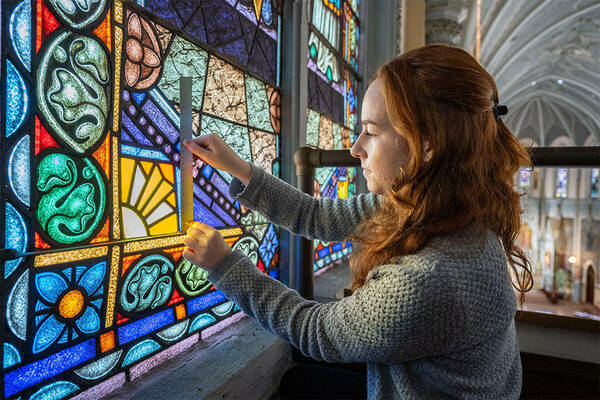
The mission of the MSHP is to prepare students to become leaders in such areas as architectural design, preservation consulting, government service, and heritage advocacy. We emphasize respect for cultural heritage as the basis for informed conservation and the design of harmonious new development. The curriculum presupposes that knowledge of and care for historic places can provide essential means for building more resilient and sustainable development in the future. These objectives are pursued in the context of the Catholic ideals of community, environmental stewardship, and civic engagement.
The Program
MSHP students study for four semesters, including one semester based in Rome, plus one introductory summer course and a second summer internship. Our faculty includes recognized scholars in the field, and the semester in Rome offers a unique opportunity for students to work with international professionals and researchers involved in heritage conservation at the highest level. Interdisciplinary coursework, field study, and individual research offer students opportunities to develop the knowledge, skills, and perspective necessary to graduate with readily marketable skills, excel in this growing field, and advance the discipline in both the academy and the profession.
The studio coursework consists of:
- a foundational traditional architecture studio
- an on-campus urban conservation studio
- one architectural and urban conservation studio in Rome
- a terminal thesis project in the student's fourth semester
A minimum of 55 credit hours are required for graduation. Required studio and seminar courses are supplemented by others including History and Theory of Preservation, Research and Documentation of Historic Buildings, Historic Construction and Materials, Historic Preservation and Climate Change, and Preservation Practice. Students will also have opportunities for electives either within or outside the School of Architecture.
Students admitted to the two-year MSHP degree must have one of the following:
- Bachelor of Art in Architecture
- Bachelor of Science in Architecture
- Bachelor of Architecture
- Master of Architecture degree, or its international equivalent
- Other degrees may be admitted to the program upon showing evidence of sufficient previous study and skills to complete the required coursework for the MSHP
Those without previous architectural study are invited to apply to the Master of Architecture degree program at Notre Dame.
Underwritten Scholarships
The program is generously supported by The Michael Christopher Duda Center for Preservation, Resilience, and Sustainability, established by a gift of the Fritz and Mary Lee Duda Family Foundation.
The MSHP program at Notre Dame is recognized by the National Council on Preservation Education (NCPE).
Inquiries regarding the MSHP program and application may be directed to archgrad@nd.edu.